Overview:
The land of Everest. Unsurprisingly Nepal is generally the home to visitors wishing to get involved in trekking and other outdoor activities. Kathmandu Valley has thousands of Hindu temples and Buddhist stupas, as well as rich nature reserves on top of the popular trekking persuits. The country is a very remote place and so preparation is important, with consideration of what you are going to be doing. The monsoon season notes barely any tourists, but travel is more difficult, plus many lodges and activities are closed.
60 or more ethnic groups occupy Nepal. The communist party took over the Maoist government in 2008 and this has brought stability to the country. Prices are increasing due to the increasing popularity of the country and as a result of the more stable economic conditions.
Travel is far less safe in Nepal that other countries due to the landscape, with bus crashes most common. Traffic can be a nightmare especially at night.
Weather:
Nepal's temperature varies wildly depending on where you are, as a result of the topography of the country. In the Terai (lowlands bordering India) the climate is hot and humid, similar to India. In the mountains however the temperature is a lot lower, sees snow every winter and produces more rainfall.
The monsoon is at its heaviest in Nepal from June to September. The rains are generally lighter high in the Himalayas than in Kathmandu, though the mountain peaks are often lost in cloud. Monsoon season makes trekking more dangerous and difficult. Unexpected changes in the weather occurs and it is during this 'off season' that many activies are closed. This includes paragliding and many trails. That said rafting is still an option and sees the most adventurous rapids, as the rivers swell.
Visas:
Nepal accepts Visa applications at the boarder itself. Some only accept US$ and so even if this isn't the case for the crossing you will be making it is wise to have an amount to hand in any case. Passport sized photos are needed for all applications and need purchasing in advance (at home). A Nepali visa takes up a whole passport page, so ensure you have enough!
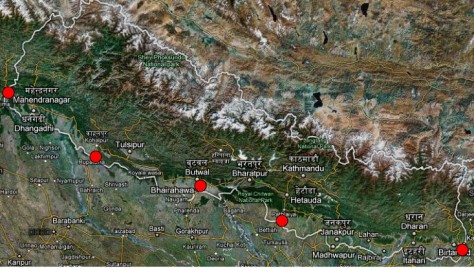
Due to the Himalayan range the main border crossings with Nepal are on the border with India rather than Tibet. These are marked below.

Major Border points with India.
The primary immigration point used is at Sunauli near Bhairawa (second mark from right). Visa Requirements and Fees Tourist Visa with Multiple Entry for 15 days: US $25 Tourist Visa with Multiple Entry for 30 days: US $40 Tourist Visa with Multiple Entry for 100 days: US $100. Visa Extentions: US $2 Multiple Entry facility (obtained only for the extension period): US $20 or equivalent and visa fee for the extended period. Travel: Due to its remote location Nepal is reached generally by road and flying, but flights (quite expensive) are available to the capital, Katmandu. Trains in Nepal are almost non-existent and certainly not available for more than a tourist train ride in the country. Many people will hire a motorbike to escape from the tourist areas and travel into the country, but be aware of the risks associated. Traffic in Nepal is very unaware and unpredictable, so it is up to you to be extra vigilant and aware of the local laws. Similar to other places in Asia the police can target tourists for motoring offenses to secure a 'non-official bonus'. Trains: Trains are non-existent to use as practical transport or a means of travel around Nepal. The only train that operates is between Janakpur and Khajuri. The train goes on and crosses the border, but this can only be used by Indians and the Nepalise. Buses: Do not travel at night when ever possible as drivers use the quieter roads to drive quickly and accidents are common at night, especially in the hills. Costs: Generally you can get away with spending £7 for general bed and food etc. This doesn’t account for park entry, nor trekking costs (Guides and more expensive lodgings).