At 5pm on the 18th May 2010 a yellow rickshaw approached us on the roadside and Umesh appeared with a smile and helped us jam our 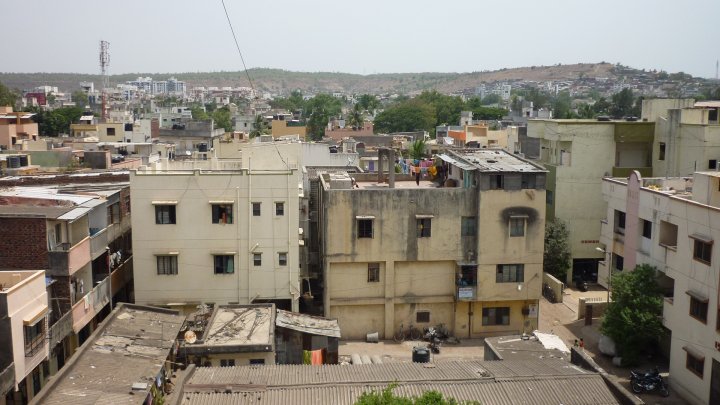 bags into the rickshaw. It seemed strange being picked up by someone you have met online, to a place you do not know. Yet having done exactly that in the US I am confident and excited to see what will unfold. A 20 minute ride through sticky, dusty Pune we reach Umesh's house and meet the family. A suburban area of town in a clean, modern apartment block we are due to stay here for 1 night before heading off to the farm. It is bliss to be staying somewhere with AC for the first time since Mumbai and actually is a little cold (never satisfied!) Umesh's daughter Yash and Anuradha are lovely and instantly start making plans for what we need to see/ do.
Tonight is swimming at the local outdoor pool, but we need a membership. No worries thouugh as Umesh knows the local politician who owns the pool. Despite being questioned as to why I am wearing 'outside clothes' (my swimming shorts) it is lovely to cool off and watch the Indian, not so good swimmers and do a few laps with bats circling over head. We are getting used to numerous eyes being fixed on us and as I am not self-conscious, don't really care. It is great to meet Umesh and his family as it meets our aims of getting to know local people and see what people are doing first hand. These are great guys also and sitting down over a dry shrimp curry that Umesh shows me how to make we sit together eating on the floor, with a few large Kingfisher beers, discussing Indian politics, 'backshish' (blackmail and corruption) stories and commenting on Indian music videos. Family life in middle class India is good and with a family helper makes those chores that much easier.
The next day we set off to the farm. We were due to go to the meditation centre, but Umesh warns that it is far too hot and that lack of wind makes it intolerable. People are working for 4 hours a day in early morning and evening only there, so we head to the Mango farm where at least the burn is subsides with the breeze. This place really is in the middle of nowhere.
View Larger Map
20 miles SE of Pune the local village has a population of around 70-100 people and 2 sparsely stocked shops. This is not a problem though as a villager visited twice a day with food, which meant we just needed any other items we could pick up. It soon became clear that this
bags into the rickshaw. It seemed strange being picked up by someone you have met online, to a place you do not know. Yet having done exactly that in the US I am confident and excited to see what will unfold. A 20 minute ride through sticky, dusty Pune we reach Umesh's house and meet the family. A suburban area of town in a clean, modern apartment block we are due to stay here for 1 night before heading off to the farm. It is bliss to be staying somewhere with AC for the first time since Mumbai and actually is a little cold (never satisfied!) Umesh's daughter Yash and Anuradha are lovely and instantly start making plans for what we need to see/ do.
Tonight is swimming at the local outdoor pool, but we need a membership. No worries thouugh as Umesh knows the local politician who owns the pool. Despite being questioned as to why I am wearing 'outside clothes' (my swimming shorts) it is lovely to cool off and watch the Indian, not so good swimmers and do a few laps with bats circling over head. We are getting used to numerous eyes being fixed on us and as I am not self-conscious, don't really care. It is great to meet Umesh and his family as it meets our aims of getting to know local people and see what people are doing first hand. These are great guys also and sitting down over a dry shrimp curry that Umesh shows me how to make we sit together eating on the floor, with a few large Kingfisher beers, discussing Indian politics, 'backshish' (blackmail and corruption) stories and commenting on Indian music videos. Family life in middle class India is good and with a family helper makes those chores that much easier.
The next day we set off to the farm. We were due to go to the meditation centre, but Umesh warns that it is far too hot and that lack of wind makes it intolerable. People are working for 4 hours a day in early morning and evening only there, so we head to the Mango farm where at least the burn is subsides with the breeze. This place really is in the middle of nowhere.
View Larger Map
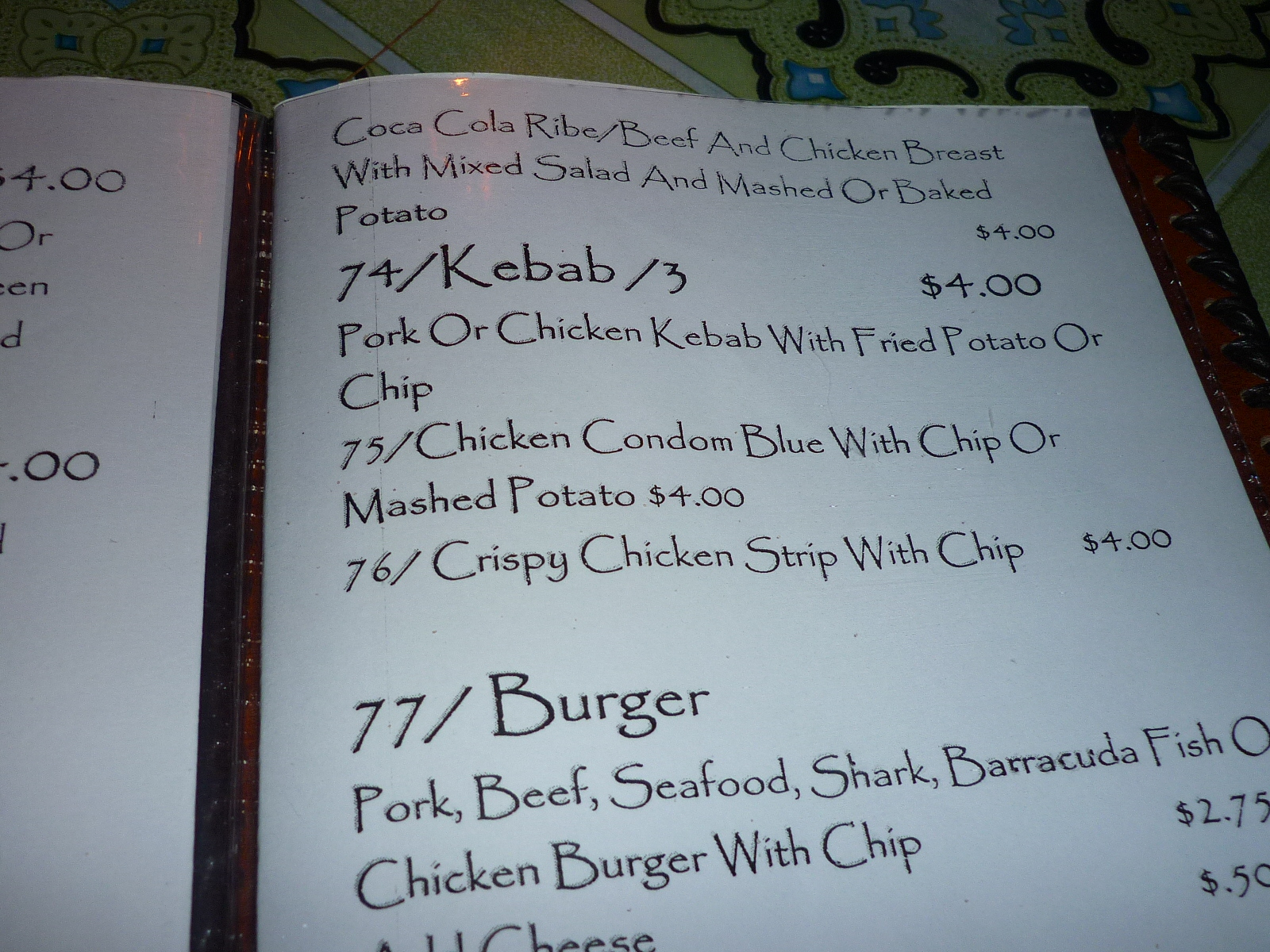
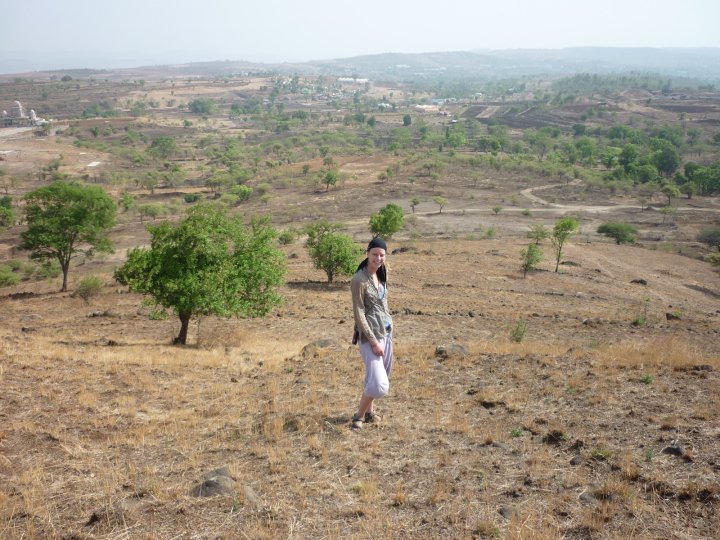
20 miles SE of Pune the local village has a population of around 70-100 people and 2 sparsely stocked shops. This is not a problem though as a villager visited twice a day with food, which meant we just needed any other items we could pick up. It soon became clear that this 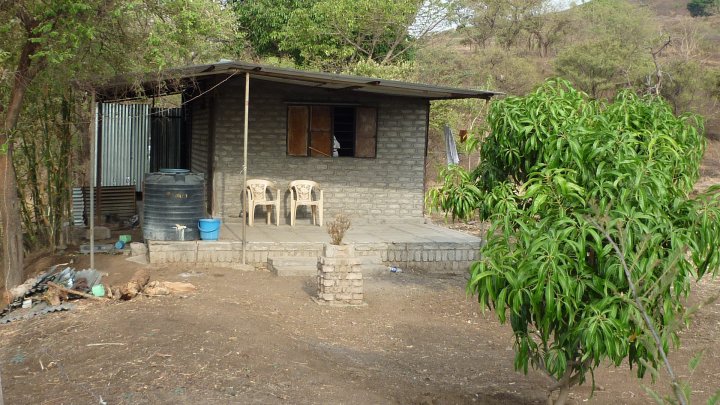 was Pepsi (Rs23), crisps (Rs10) and buscuits (Rs5). No beer or any alcohol, so Gold Flake cigarettes (Rs48) was my only vice. It turns out that most people in India chew tobacco as it is only Rs1 per packet, compared to 1 small cigerette (they are sold in small 6mm or large 8mm sizes), which costs Rs3. That said they do also smoke "beedies", which consists of a small amount of tobacco wrapped in a leaf of some kind. They taste pretty good, but are apparrently twice as bad for your health than cigerettes and do not have a filter. The chewing tobacco is not like the US version, which is prime leaf tobacco however, but the offcuts of the plant, including stalk and other remnants, which is then flavoured by some kind of artificial flavouring. The great thing about the farm is that you can begin pondering this kind of pertinent issue!It is beautiful here though, even being in its arid state. Sitting on the verrander looking across the rows of Am (Mango) peards (trees), surrounded by hills and a temple being built in the mid distance. Surprisingly however it is not too peaceful.
 The 3 dogs that guard the farm bark at most things, as guard dogs would, but this means regular wake up calls throughout the night. There is also an air force base over the hills so the MIG fighter jets also cut through the stillness with their supersonic roars. At night, 10pm
 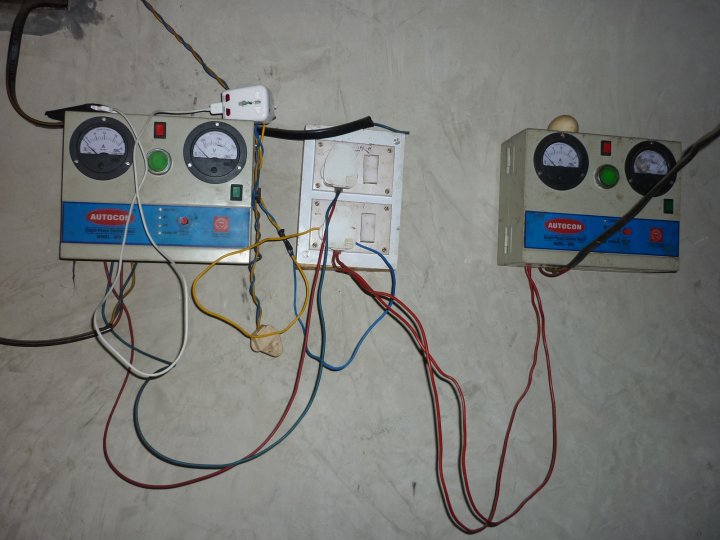 there is often the low thuds of that crazy dance music stuff... weddings in India are loud and the music from them can be heard from the town 2 miles away. We settle into the routine fairly quickly. Waking at around 6- 7am, watering the 10 Mango sapling trees by bucket (15mins work) and then waiting out the heat of the day until around 4-5pm when we water the Mango trees again. The rest of the time we spend reading, pondering, or if you are me making things. This is the first time I have produced an effective dustpan using ductape as the lip- it's a keeper and even Sanchin (the current caretaker is impressed, which is good as mostly we receive 'no's to most actions and suggestions!) Communication here is interesting as it involves sign language with everyone mixed with the odd word of English, Hindi and Marati (the Maharashran language).
The only thing that was not met by any sort of "No" was cut down 11 trees that has died through fire. The task was to cut them down, chop them into 1/2 meter lengths and carry them back to the farmhouse. It was baking and sweat literally poured off leading to serious, pee burning dehydration. I was on a mission though and even when Laura couldn't go on continued until everything had been cut down and into lengths. Apparently I am a 'strong boy' as Sanchin commented, while watching me having finished watering the 10 trees an hour earlier (Indian work ethic even Umesh agrees with). The next day it was time to stack and carry back. Laura couldn't face it so I conceive a plan of carrying back the wood using dried reeds, which was useful as we had run out of kindling for the fire. On the last bunch of reeds, yes I cut my finger halfway to the bone and blood is pumping out of my finger and coats my whole hand. I see the fat under the skin and know it is deep. Damn. Back at the farmhoue we then realise that despite carrying a ridiculously large amount of medical supplies that gauze is not one of them. So rigging a wound dressing out of plasters was interesting at best. Iodine still hurts, but certainly does the job.
As the days plod on our love of the farm wears into slight dispair. Being told no without a reason constantly and a lack of understanding of reason makes it diffcult to appreciate what is going on and this has a negative on your perceptions of general living. The food is fine. Fine in that it is food and it is a 2 course meal. However spiced Bindi/Baji/Vegetables (all the same thing it turns out) with chapati or Roti and then a gravy based dish with plain rice becomes wearing, especially when the same veg and main dish turns up every 2 meals. There are generally 4 options of a meal:
Chapati or Roti with Ocra or green beans
followed by
Watery Dal Fry or Aloo Gobi (a little potato and cauliflower with a thin sauce)and rice to soak up the thin sauce.
This is always washed down with the water from the well which is the only water supply here and actually very good.
there is often the low thuds of that crazy dance music stuff... weddings in India are loud and the music from them can be heard from the town 2 miles away. We settle into the routine fairly quickly. Waking at around 6- 7am, watering the 10 Mango sapling trees by bucket (15mins work) and then waiting out the heat of the day until around 4-5pm when we water the Mango trees again. The rest of the time we spend reading, pondering, or if you are me making things. This is the first time I have produced an effective dustpan using ductape as the lip- it's a keeper and even Sanchin (the current caretaker is impressed, which is good as mostly we receive 'no's to most actions and suggestions!) Communication here is interesting as it involves sign language with everyone mixed with the odd word of English, Hindi and Marati (the Maharashran language).
The only thing that was not met by any sort of "No" was cut down 11 trees that has died through fire. The task was to cut them down, chop them into 1/2 meter lengths and carry them back to the farmhouse. It was baking and sweat literally poured off leading to serious, pee burning dehydration. I was on a mission though and even when Laura couldn't go on continued until everything had been cut down and into lengths. Apparently I am a 'strong boy' as Sanchin commented, while watching me having finished watering the 10 trees an hour earlier (Indian work ethic even Umesh agrees with). The next day it was time to stack and carry back. Laura couldn't face it so I conceive a plan of carrying back the wood using dried reeds, which was useful as we had run out of kindling for the fire. On the last bunch of reeds, yes I cut my finger halfway to the bone and blood is pumping out of my finger and coats my whole hand. I see the fat under the skin and know it is deep. Damn. Back at the farmhoue we then realise that despite carrying a ridiculously large amount of medical supplies that gauze is not one of them. So rigging a wound dressing out of plasters was interesting at best. Iodine still hurts, but certainly does the job.
As the days plod on our love of the farm wears into slight dispair. Being told no without a reason constantly and a lack of understanding of reason makes it diffcult to appreciate what is going on and this has a negative on your perceptions of general living. The food is fine. Fine in that it is food and it is a 2 course meal. However spiced Bindi/Baji/Vegetables (all the same thing it turns out) with chapati or Roti and then a gravy based dish with plain rice becomes wearing, especially when the same veg and main dish turns up every 2 meals. There are generally 4 options of a meal:
Chapati or Roti with Ocra or green beans
followed by
Watery Dal Fry or Aloo Gobi (a little potato and cauliflower with a thin sauce)and rice to soak up the thin sauce.
This is always washed down with the water from the well which is the only water supply here and actually very good.
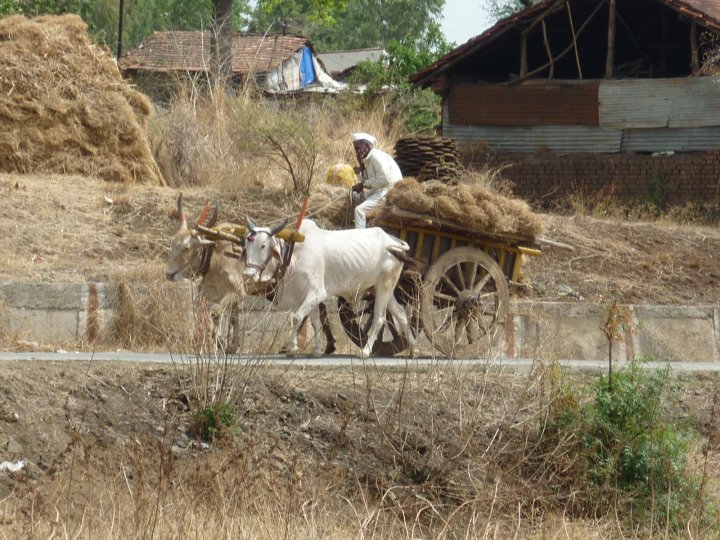 The second time when on a Sunday the lady brought a treat- eggs, which were then curried. Lovely...
The last time was when we were invited to the village gathering at the temple a day before departure with the rest of the villagers. A time when everyone gets together once per month for people to make offerings to the gods and pray for what they want in life. This is followed by a similar meal structure, but with the rice being Pilau and the curry sauce having a greater variety of vegetables and more complex spicing. This really was heaven for Laura and I, who sat together in our 'Ethnic' (as the Indians call it themselves) clothing. This is VIP treatment as the ladies are not able to sit with the men and the elders eat first, which we are also not. This was a fantastic experience and honor to see the gods communicate with the village 'spiritualists'.
The second time when on a Sunday the lady brought a treat- eggs, which were then curried. Lovely...
The last time was when we were invited to the village gathering at the temple a day before departure with the rest of the villagers. A time when everyone gets together once per month for people to make offerings to the gods and pray for what they want in life. This is followed by a similar meal structure, but with the rice being Pilau and the curry sauce having a greater variety of vegetables and more complex spicing. This really was heaven for Laura and I, who sat together in our 'Ethnic' (as the Indians call it themselves) clothing. This is VIP treatment as the ladies are not able to sit with the men and the elders eat first, which we are also not. This was a fantastic experience and honor to see the gods communicate with the village 'spiritualists'.
bags into the rickshaw. It seemed strange being picked up by someone you have met online, to a place you do not know. Yet having done exactly that in the US I am confident and excited to see what will unfold. A 20 minute ride through sticky, dusty Pune we reach Umesh's house and meet the family. A suburban area of town in a clean, modern apartment block we are due to stay here for 1 night before heading off to the farm. It is bliss to be staying somewhere with AC for the first time since Mumbai and actually is a little cold (never satisfied!) Umesh's daughter Yash and Anuradha are lovely and instantly start making plans for what we need to see/ do.
Tonight is swimming at the local outdoor pool, but we need a membership. No worries thouugh as Umesh knows the local politician who owns the pool. Despite being questioned as to why I am wearing 'outside clothes' (my swimming shorts) it is lovely to cool off and watch the Indian, not so good swimmers and do a few laps with bats circling over head. We are getting used to numerous eyes being fixed on us and as I am not self-conscious, don't really care. It is great to meet Umesh and his family as it meets our aims of getting to know local people and see what people are doing first hand. These are great guys also and sitting down over a dry shrimp curry that Umesh shows me how to make we sit together eating on the floor, with a few large Kingfisher beers, discussing Indian politics, 'backshish' (blackmail and corruption) stories and commenting on Indian music videos. Family life in middle class India is good and with a family helper makes those chores that much easier.
The next day we set off to the farm. We were due to go to the meditation centre, but Umesh warns that it is far too hot and that lack of wind makes it intolerable. People are working for 4 hours a day in early morning and evening only there, so we head to the Mango farm where at least the burn is subsides with the breeze. This place really is in the middle of nowhere.
View Larger Map
20 miles SE of Pune the local village has a population of around 70-100 people and 2 sparsely stocked shops. This is not a problem though as a villager visited twice a day with food, which meant we just needed any other items we could pick up. It soon became clear that this was Pepsi (Rs23), crisps (Rs10) and buscuits (Rs5). No beer or any alcohol, so Gold Flake cigarettes (Rs48) was my only vice. It turns out that most people in India chew tobacco as it is only Rs1 per packet, compared to 1 small cigerette (they are sold in small 6mm or large 8mm sizes), which costs Rs3. That said they do also smoke "beedies", which consists of a small amount of tobacco wrapped in a leaf of some kind. They taste pretty good, but are apparrently twice as bad for your health than cigerettes and do not have a filter. The chewing tobacco is not like the US version, which is prime leaf tobacco however, but the offcuts of the plant, including stalk and other remnants, which is then flavoured by some kind of artificial flavouring. The great thing about the farm is that you can begin pondering this kind of pertinent issue!It is beautiful here though, even being in its arid state. Sitting on the verrander looking across the rows of Am (Mango) peards (trees), surrounded by hills and a temple being built in the mid distance. Surprisingly however it is not too peaceful.
The 3 dogs that guard the farm bark at most things, as guard dogs would, but this means regular wake up calls throughout the night. There is also an air force base over the hills so the MIG fighter jets also cut through the stillness with their supersonic roars. At night, 10pm there is often the low thuds of that crazy dance music stuff... weddings in India are loud and the music from them can be heard from the town 2 miles away. We settle into the routine fairly quickly. Waking at around 6- 7am, watering the 10 Mango sapling trees by bucket (15mins work) and then waiting out the heat of the day until around 4-5pm when we water the Mango trees again. The rest of the time we spend reading, pondering, or if you are me making things. This is the first time I have produced an effective dustpan using ductape as the lip- it's a keeper and even Sanchin (the current caretaker is impressed, which is good as mostly we receive 'no's to most actions and suggestions!) Communication here is interesting as it involves sign language with everyone mixed with the odd word of English, Hindi and Marati (the Maharashran language).
The only thing that was not met by any sort of "No" was cut down 11 trees that has died through fire. The task was to cut them down, chop them into 1/2 meter lengths and carry them back to the farmhouse. It was baking and sweat literally poured off leading to serious, pee burning dehydration. I was on a mission though and even when Laura couldn't go on continued until everything had been cut down and into lengths. Apparently I am a 'strong boy' as Sanchin commented, while watching me having finished watering the 10 trees an hour earlier (Indian work ethic even Umesh agrees with). The next day it was time to stack and carry back. Laura couldn't face it so I conceive a plan of carrying back the wood using dried reeds, which was useful as we had run out of kindling for the fire. On the last bunch of reeds, yes I cut my finger halfway to the bone and blood is pumping out of my finger and coats my whole hand. I see the fat under the skin and know it is deep. Damn. Back at the farmhoue we then realise that despite carrying a ridiculously large amount of medical supplies that gauze is not one of them. So rigging a wound dressing out of plasters was interesting at best. Iodine still hurts, but certainly does the job.
As the days plod on our love of the farm wears into slight dispair. Being told no without a reason constantly and a lack of understanding of reason makes it diffcult to appreciate what is going on and this has a negative on your perceptions of general living. The food is fine. Fine in that it is food and it is a 2 course meal. However spiced Bindi/Baji/Vegetables (all the same thing it turns out) with chapati or Roti and then a gravy based dish with plain rice becomes wearing, especially when the same veg and main dish turns up every 2 meals. There are generally 4 options of a meal:
Chapati or Roti with Ocra or green beans
followed by
Watery Dal Fry or Aloo Gobi (a little potato and cauliflower with a thin sauce)and rice to soak up the thin sauce.
This is always washed down with the water from the well which is the only water supply here and actually very good.
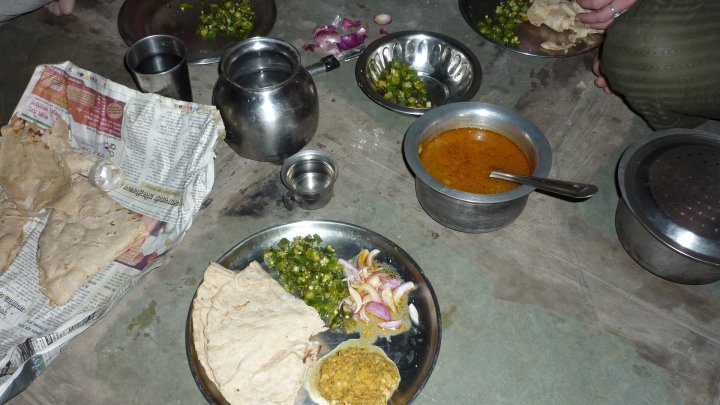
The second time when on a Sunday the lady brought a treat- eggs, which were then curried. Lovely...
The last time was when we were invited to the village gathering at the temple a day before departure with the rest of the villagers. A time when everyone gets together once per month for people to make offerings to the gods and pray for what they want in life. This is followed by a similar meal structure, but with the rice being Pilau and the curry sauce having a greater variety of vegetables and more complex spicing. This really was heaven for Laura and I, who sat together in our 'Ethnic' (as the Indians call it themselves) clothing. This is VIP treatment as the ladies are not able to sit with the men and the elders eat first, which we are also not. This was a fantastic experience and honor to see the gods communicate with the village 'spiritualists'.Enjoyed this story?
Read more stories from India→