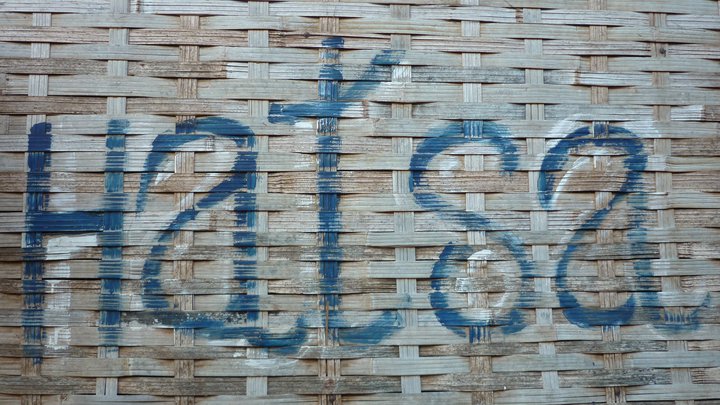
 Immediately our impressions of the Ban (Lao for 'village') was "brown" of all shades. The brown clay rose into the brown wooden and bamboo mix houses. Everything here is made of the local teak and bamboo. Everything felt natural, apart from the rubbish that is generally dumped down towards the river. Burning waste here is not so common, so unfortunately again the river is used to carry garbage away.
We made it to our new home in a complete sweat and shown to our room. A lovely traditionally built place with a balcony looking out over the river.
Immediately our impressions of the Ban (Lao for 'village') was "brown" of all shades. The brown clay rose into the brown wooden and bamboo mix houses. Everything here is made of the local teak and bamboo. Everything felt natural, apart from the rubbish that is generally dumped down towards the river. Burning waste here is not so common, so unfortunately again the river is used to carry garbage away.
We made it to our new home in a complete sweat and shown to our room. A lovely traditionally built place with a balcony looking out over the river.
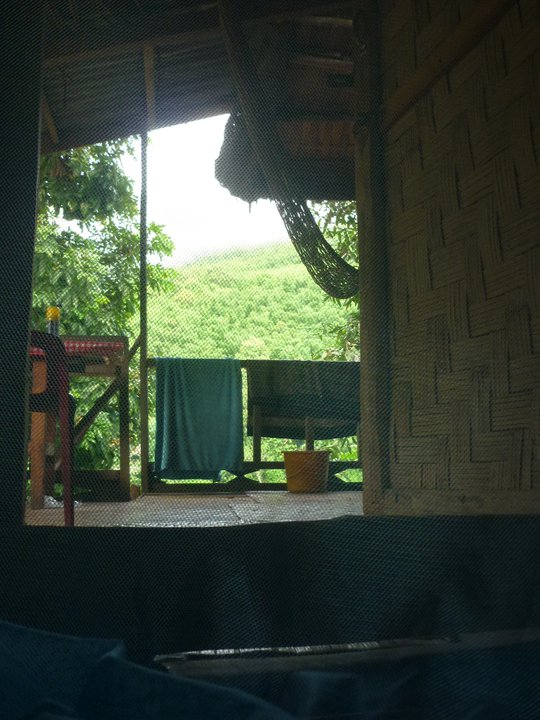 This had already been set up for us, cushions on the floor and mosquito net were more than adequate in such a rural setting. The family were all there and we introduced ourselves to Ping, T, BinTan and Simone and were soon sat down to our first home cooked meal and what a spread; BBQ fish, chicken Laap (chilli and locally picked herbs with minced meat- lovely!), jiao (a freshly made, fiery chilli sauce) with the ever present sticky rice.
We were shown around the school and presented with our challenge. To rebuild the toilet cubicles that had been demolished by a massive mango tree. It was in a poor state with one of the two cubicles almost completely destroyed. We would need to rebuild and repair 3 concrete columns reinforced with steel rebar, and rebuild the walls before setting the toilet in again. This was all needed in 3 weeks, starting now!
After another lovely meal in the evening accompanied by the family's home made Lao Lao (the Lao drink and spirit made from sticky rice no less) we asked a few questions via the translator, offering our help for home tasks and showing our interest in the local food, cooking it etc. We retired early as everyone in the village wakes up with the cockerels. This is generally at 4 - 5am each morning. So, the next day we were up and waving Jan off. Jan, General Manager at the Bamboo School, is a German foundation that supports the development of education facilities around northern Laos. We had numerous other projects pointed out en route to us arriving in Hatsa and their presence and aid is clearly made in the region.
Our first day of work was one of establishing a plan and giving ourselves an overall strategy of what to do in what order. We had little experience in heavy construction like this and having worked with each other on numerous and varied tasks knew we needed to be on the same page to get this done well. I first began creating a wooden mould
This had already been set up for us, cushions on the floor and mosquito net were more than adequate in such a rural setting. The family were all there and we introduced ourselves to Ping, T, BinTan and Simone and were soon sat down to our first home cooked meal and what a spread; BBQ fish, chicken Laap (chilli and locally picked herbs with minced meat- lovely!), jiao (a freshly made, fiery chilli sauce) with the ever present sticky rice.
We were shown around the school and presented with our challenge. To rebuild the toilet cubicles that had been demolished by a massive mango tree. It was in a poor state with one of the two cubicles almost completely destroyed. We would need to rebuild and repair 3 concrete columns reinforced with steel rebar, and rebuild the walls before setting the toilet in again. This was all needed in 3 weeks, starting now!
After another lovely meal in the evening accompanied by the family's home made Lao Lao (the Lao drink and spirit made from sticky rice no less) we asked a few questions via the translator, offering our help for home tasks and showing our interest in the local food, cooking it etc. We retired early as everyone in the village wakes up with the cockerels. This is generally at 4 - 5am each morning. So, the next day we were up and waving Jan off. Jan, General Manager at the Bamboo School, is a German foundation that supports the development of education facilities around northern Laos. We had numerous other projects pointed out en route to us arriving in Hatsa and their presence and aid is clearly made in the region.
Our first day of work was one of establishing a plan and giving ourselves an overall strategy of what to do in what order. We had little experience in heavy construction like this and having worked with each other on numerous and varied tasks knew we needed to be on the same page to get this done well. I first began creating a wooden mould 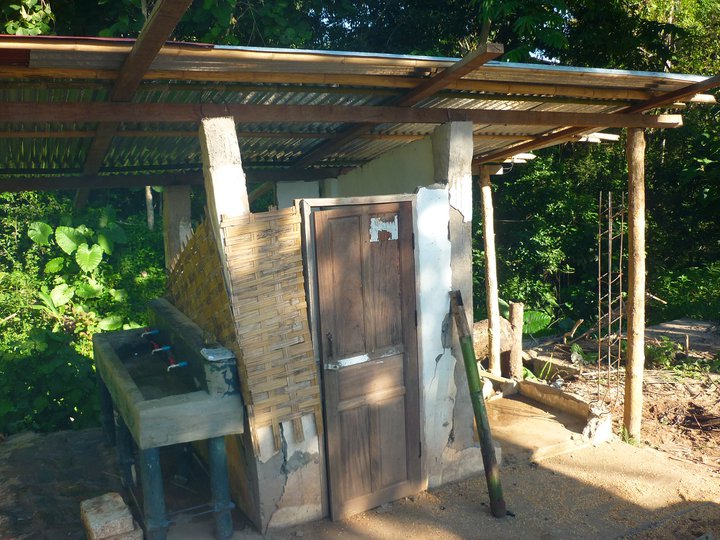 out of timber planks we had picked up en route. Unfortunately they were not the right size. The columns were supposed to be 15cm square, but in what had been described to us as Lao style, meant inaccurate. We soon realised that we would be working with everything that was not quite right. The floor was not level and the walls were not straight. This made our job more difficult, as what do you decide to relate everything to?
The first couple of days went ok and we soon established our expectations of the difficulties we would face in delivering the kind of standard that was asked for. A prime example is the mould I built for the front column. Due to the wood not being wide enough the edges had to be used all around. This meant large gaps on each corner of the mould- not great for pouring concrete in and creating square columns! To made this sturdy enough the contraption that was built ended up being called the beast. It worked though- just.
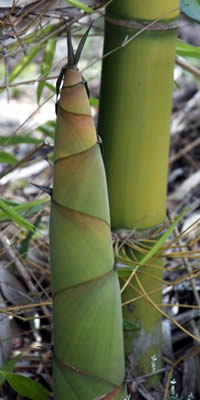
We soon developed a routine. Although the family woke up early, either to forage for bamboo shoots, herbs or go fishing at 3am, we slept until 7am. The cockerels disturbed us somewhat as there must have been over 20 roosters in the near vicinity that made the morning chorus like a squawking choir starting at 4am, running until mid morning. We always said "Sabbai dee" to the same old lady on the street sitting and chewing betel nut (a natural stimulant) so her face was contorted and had red lips. A little boy was generally playing in the mud when we past on the way back for lunch and the same little girl we called grizzle chops was screaming with tears, snotty nosed.
We had some precious interactions with the people and saw them with enough regularity to develop some common ground and a connection. Yet we never felt that our presence was actually noted to be of benefit by the village and not really welcomed in as we had pre conceived. This was perhaps a reflection of the "Nayban" or village chiefs attitudes towards the support they were receiving. It was generally a 'take, take, take' attitude, where help was not given by the village and yet they asked for a lot from the bamboo school.
out of timber planks we had picked up en route. Unfortunately they were not the right size. The columns were supposed to be 15cm square, but in what had been described to us as Lao style, meant inaccurate. We soon realised that we would be working with everything that was not quite right. The floor was not level and the walls were not straight. This made our job more difficult, as what do you decide to relate everything to?
The first couple of days went ok and we soon established our expectations of the difficulties we would face in delivering the kind of standard that was asked for. A prime example is the mould I built for the front column. Due to the wood not being wide enough the edges had to be used all around. This meant large gaps on each corner of the mould- not great for pouring concrete in and creating square columns! To made this sturdy enough the contraption that was built ended up being called the beast. It worked though- just.
We soon developed a routine. Although the family woke up early, either to forage for bamboo shoots, herbs or go fishing at 3am, we slept until 7am. The cockerels disturbed us somewhat as there must have been over 20 roosters in the near vicinity that made the morning chorus like a squawking choir starting at 4am, running until mid morning. We always said "Sabbai dee" to the same old lady on the street sitting and chewing betel nut (a natural stimulant) so her face was contorted and had red lips. A little boy was generally playing in the mud when we past on the way back for lunch and the same little girl we called grizzle chops was screaming with tears, snotty nosed.
We had some precious interactions with the people and saw them with enough regularity to develop some common ground and a connection. Yet we never felt that our presence was actually noted to be of benefit by the village and not really welcomed in as we had pre conceived. This was perhaps a reflection of the "Nayban" or village chiefs attitudes towards the support they were receiving. It was generally a 'take, take, take' attitude, where help was not given by the village and yet they asked for a lot from the bamboo school.
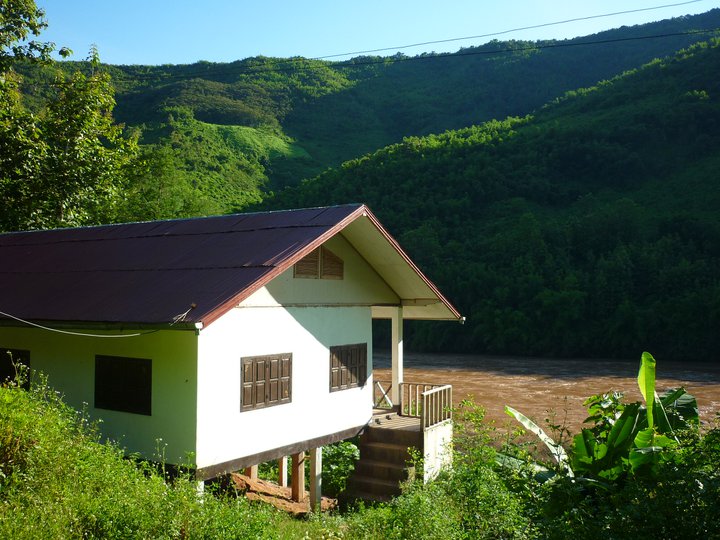 New roof on the school, boarding house etc. Yet we needed sand and this was promised immediately so we could get on with the concrete mixing and real work. This ended up taking 4 days and 2 additional requests to the Nayban to mobilise the people, which as usual turned out to be all the kids of the village. Around 20 kids turned up, some as young as 5 years old, all with bags and head straps, carrying them down to the river banks, filling them up as much as they could carry up the steep hill to the school and dumping it where we needed it. We felt bad watching them perform this task, but this was promised by the village and this is the way it is. In many Asian countries the kids do the work that no one else wants to do.
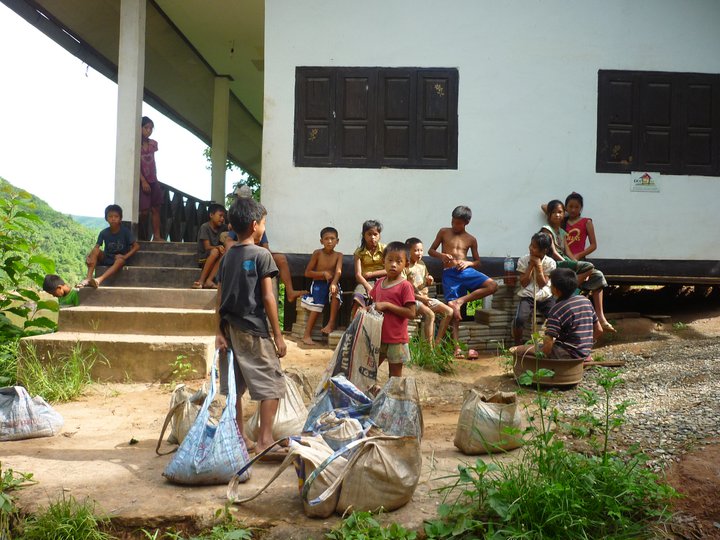 It seemed crazy that the young men were doing nothing but watch also. some walk by while we were working to watch what we were doing. It made us think a lot about how aid is given and delivered more than ever. One prime example of this was when the hard wood door arrived and was left on the river bank. Hauling it up the steep slippery steps with Laura was a complete mission and too heavy for her to carry. Yet none of the men would help, despite being asked. They just sat there and watched us struggle.
We had plenty of time to think about these things as well as have other projects during the day. We started work at around 8:30am after breakfast of either things left over from the night before, bamboo soup and sticky rice, omelette with sticky rice or fish soup and you guessed it sticky rice! I didn't really enjoy it when I first tried it, but eaten
It seemed crazy that the young men were doing nothing but watch also. some walk by while we were working to watch what we were doing. It made us think a lot about how aid is given and delivered more than ever. One prime example of this was when the hard wood door arrived and was left on the river bank. Hauling it up the steep slippery steps with Laura was a complete mission and too heavy for her to carry. Yet none of the men would help, despite being asked. They just sat there and watched us struggle.
We had plenty of time to think about these things as well as have other projects during the day. We started work at around 8:30am after breakfast of either things left over from the night before, bamboo soup and sticky rice, omelette with sticky rice or fish soup and you guessed it sticky rice! I didn't really enjoy it when I first tried it, but eaten 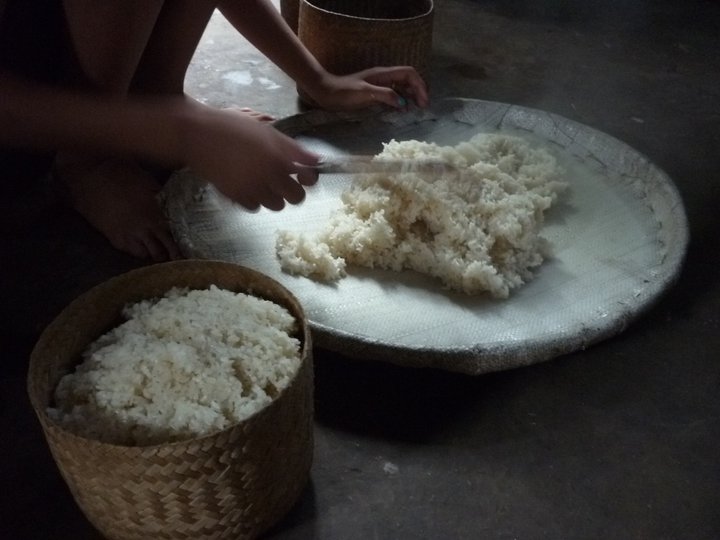 with delicious local herbs and vegetables native to the region and chilli sauce it is tasty and gives you the feeling of being satisfied. As they say "Kin Kau, Im Lai", which means eat until you are really full. We quickly became accustomed to the rules of eating. For example you cannot lean over someone else taking some food. Food is served in the middle of the table and you hold a large wad of sticky rice in the non-dominant hand, rip a bit off and then scoop some of the vegetables or whatever onto the rice ball you make in the dominant hand with your thumb. You can only use your hands when you are holding sticky rice, if not then a spoon or fork is used. A water bowl is set by the side of the table for washing before and after eating. A local tea called "Yar" is generally drunk with a meal when Lao Lao is not drunk, but this can be pulled out at any meal, time of day or any occasion! Considering it is actually a branch of a tea it is really tasty and far better than boiled water. This is because the water is taken directly from the river and used for everything. It is muddy, even when boiled when large sediment develops. The tea is a great disguise for mud water!
After being in Hatsa for 4 days it was Buddha day, unbeknown to us until we emerged for breakfast to see a large spread being assembled and people starting turning up to calls of "kin kau". It is customary in Laos that if a family is eating and people pass that they are invited in to join the meal. At this party we were joined by an extra 4 people, the Lao Lao was out at 8am and everyone wobbling by 9:30am. Smoked fish was on the table with chicken noodles, morning glory (an Asian spinach, which is really simple but tasty), and spicy fish soup. It was a beautiful meal with everyone in high spirits. After 2 bottles of Lao Lao beers were bought, I went to contribute some. Undecided on 2 or 3 bottles, chose 3 and as it had the usual heavy rain the night before the clay was wet and slippery. Of course I fell over and smashed one bottle, fragments in my knee and a good set of people around to see me get caked in red/brown mud! Two visitors had to leave mid morning time as it turned out they were nurses for the local clinic, built by UNICEF and supported by a few other organisations. I headed over to the hospital with Ping to see what was going on. People were paying and receiving antibiotic injections for any ailment really and Ping had one just because it may do something for something. It was comical though as the nurses were drunk, beer bottles were sat empty in the waiting room. Then when the patients has were sorted m0ney was taken out of the draw from what was paid for the injections, given to a little girl who then came back with 6 bottles of beer. I sat with them feeling guilty and wondering if I was really drinking the money taken for hospital treatment, while listening to music and laughing in the stifling heat.
The only other day of celebration was when Ping and T's family came to visit from Luang Prabang. That day was another filled with drinking and eating good food. Smoked ribs cooked with banana flowers, fried fish and other delights including a fish intestine paste mixed with chilli! We were certainly getting the local Lao food experience we were looking for. Otherwise we sat in the hammock I had bought in Vientiane, tried my hand at poetry (see end of post for the effort!) while Laura sat weaving necklaces, listening to the insects and duck's arguing, chicks tweeting and people shouting at each other through the walls of their homes. In the village everybody knows everything and a person is just part of the village, identity is communal. People chat while in the shower. You shower with clothes on and many people can see you, so privacy is minimal. Despite this a bucket wash of river water was a favourite time that happened twice a day. Refreshingly cool and amusing as I would be sat on the floor scrubbing my crotch, with ducklings looking at me to see whether it was food time or just a time to have a drink from the run off water.
with delicious local herbs and vegetables native to the region and chilli sauce it is tasty and gives you the feeling of being satisfied. As they say "Kin Kau, Im Lai", which means eat until you are really full. We quickly became accustomed to the rules of eating. For example you cannot lean over someone else taking some food. Food is served in the middle of the table and you hold a large wad of sticky rice in the non-dominant hand, rip a bit off and then scoop some of the vegetables or whatever onto the rice ball you make in the dominant hand with your thumb. You can only use your hands when you are holding sticky rice, if not then a spoon or fork is used. A water bowl is set by the side of the table for washing before and after eating. A local tea called "Yar" is generally drunk with a meal when Lao Lao is not drunk, but this can be pulled out at any meal, time of day or any occasion! Considering it is actually a branch of a tea it is really tasty and far better than boiled water. This is because the water is taken directly from the river and used for everything. It is muddy, even when boiled when large sediment develops. The tea is a great disguise for mud water!
After being in Hatsa for 4 days it was Buddha day, unbeknown to us until we emerged for breakfast to see a large spread being assembled and people starting turning up to calls of "kin kau". It is customary in Laos that if a family is eating and people pass that they are invited in to join the meal. At this party we were joined by an extra 4 people, the Lao Lao was out at 8am and everyone wobbling by 9:30am. Smoked fish was on the table with chicken noodles, morning glory (an Asian spinach, which is really simple but tasty), and spicy fish soup. It was a beautiful meal with everyone in high spirits. After 2 bottles of Lao Lao beers were bought, I went to contribute some. Undecided on 2 or 3 bottles, chose 3 and as it had the usual heavy rain the night before the clay was wet and slippery. Of course I fell over and smashed one bottle, fragments in my knee and a good set of people around to see me get caked in red/brown mud! Two visitors had to leave mid morning time as it turned out they were nurses for the local clinic, built by UNICEF and supported by a few other organisations. I headed over to the hospital with Ping to see what was going on. People were paying and receiving antibiotic injections for any ailment really and Ping had one just because it may do something for something. It was comical though as the nurses were drunk, beer bottles were sat empty in the waiting room. Then when the patients has were sorted m0ney was taken out of the draw from what was paid for the injections, given to a little girl who then came back with 6 bottles of beer. I sat with them feeling guilty and wondering if I was really drinking the money taken for hospital treatment, while listening to music and laughing in the stifling heat.
The only other day of celebration was when Ping and T's family came to visit from Luang Prabang. That day was another filled with drinking and eating good food. Smoked ribs cooked with banana flowers, fried fish and other delights including a fish intestine paste mixed with chilli! We were certainly getting the local Lao food experience we were looking for. Otherwise we sat in the hammock I had bought in Vientiane, tried my hand at poetry (see end of post for the effort!) while Laura sat weaving necklaces, listening to the insects and duck's arguing, chicks tweeting and people shouting at each other through the walls of their homes. In the village everybody knows everything and a person is just part of the village, identity is communal. People chat while in the shower. You shower with clothes on and many people can see you, so privacy is minimal. Despite this a bucket wash of river water was a favourite time that happened twice a day. Refreshingly cool and amusing as I would be sat on the floor scrubbing my crotch, with ducklings looking at me to see whether it was food time or just a time to have a drink from the run off water. 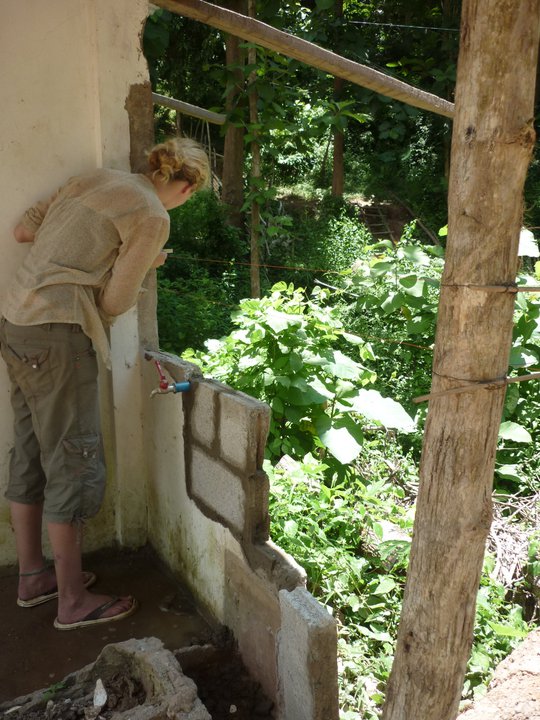 Work also started going well and we felt our confidence increase. The first column moulds came off with no problem and the beast did a great job. The columns were intact and square. Result! We soon developed a system of mixing concrete in the one bucket we had. With no spade this was done using a stick and was hard work in the tropical summer heat. Sweating buckets became normal as did the onslaught of mosquitoes that hung around the stream, near where we worked.
Unfortunately though things started to get uncomfortable. The food that was so excellent at the start began to become minimal. T would go out hunting, but only brought back 2 birds in 3 days, which we saw nothing of. Comments began to get made about how we were buying coffee (this was all we could afford as we brought little money with us). Laura was asked a few times to pay Ping to make a dress for her. We were then openly given the usual stereotypical treatment of a westerner. You have money so cough up and share it around. The truth was we didn't have money with us, apart from what was given to us by the foundation for building supplies. We started to feel more and more unwelcome. This really made itself known when the family had words and the mood in the house dropped to an all time low. The kids spent most time away from the house and T ended up leaving to go to Nong Khiaw to register as a teacher. He left with barely a word, head hung low and looking miserable. We thought he would be back in a few days, but it turned out that he would not return till after we left. This was sad as he was a lovely, smiley person and actually we agreed a cute character. He made a great deal of effort in teaching us Lao and explaining what was happening in conversations to include us. When he could see we were being reserved in eating and hanging back to see what other people did he would hand us a good part of the fish or meat, as a gesture to feel part of the family. Unfortunately it was not in Ping's nature to do this, she wore the trousers and controlled the finances. She seemed money obsessed and we suddenly realised that there was an issue with how the arrangement was set up with us staying in the house.
After T left the workload for Ping increased because she still had to feed us all, now a family of 5. This is tough. She sent Tan out to go fishing in the storms that dumped
Work also started going well and we felt our confidence increase. The first column moulds came off with no problem and the beast did a great job. The columns were intact and square. Result! We soon developed a system of mixing concrete in the one bucket we had. With no spade this was done using a stick and was hard work in the tropical summer heat. Sweating buckets became normal as did the onslaught of mosquitoes that hung around the stream, near where we worked.
Unfortunately though things started to get uncomfortable. The food that was so excellent at the start began to become minimal. T would go out hunting, but only brought back 2 birds in 3 days, which we saw nothing of. Comments began to get made about how we were buying coffee (this was all we could afford as we brought little money with us). Laura was asked a few times to pay Ping to make a dress for her. We were then openly given the usual stereotypical treatment of a westerner. You have money so cough up and share it around. The truth was we didn't have money with us, apart from what was given to us by the foundation for building supplies. We started to feel more and more unwelcome. This really made itself known when the family had words and the mood in the house dropped to an all time low. The kids spent most time away from the house and T ended up leaving to go to Nong Khiaw to register as a teacher. He left with barely a word, head hung low and looking miserable. We thought he would be back in a few days, but it turned out that he would not return till after we left. This was sad as he was a lovely, smiley person and actually we agreed a cute character. He made a great deal of effort in teaching us Lao and explaining what was happening in conversations to include us. When he could see we were being reserved in eating and hanging back to see what other people did he would hand us a good part of the fish or meat, as a gesture to feel part of the family. Unfortunately it was not in Ping's nature to do this, she wore the trousers and controlled the finances. She seemed money obsessed and we suddenly realised that there was an issue with how the arrangement was set up with us staying in the house.
After T left the workload for Ping increased because she still had to feed us all, now a family of 5. This is tough. She sent Tan out to go fishing in the storms that dumped 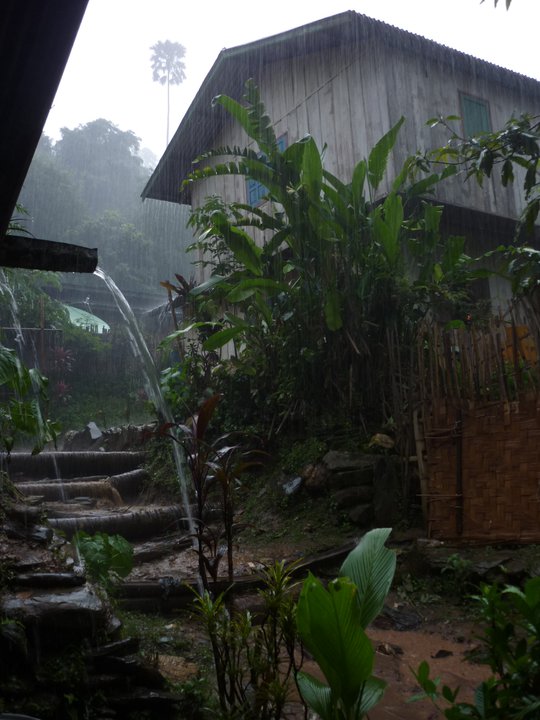 buckets of rain with booming thunder that echoed around the surrounding mountains at 3am. He was exhausted. There was strain on the family it was clear and ultimately this was reflected in the atmosphere. We started to be asked about money more and more, had less food and the effort to deliver what we needed to live dropped. This was fine as we were more than happy to help out, cook even. We offered our help but this was almost always turned down, with the exception of a few occasions to pull the black roots off freshly picked herbs.
Working hard in the heat, mixing concrete and doing heavy building took a lot of energy. When we reached a stage where breakfast stopped and we had just soup for lunch and a vegetable and sticky rice dinner, we became very hungry. As our keep was paid for so we had 3 meals a day and drinking water we had to start asking for food. This made things worse as the rest of the family seemed to be eating less, but they should have had the cash to buy ingredients without going out to collect the food. This is what happened at the start so why not now in times of hardship? We suspected that we were being used as an income and Ping was trying to make as much money out of the situation as possible. As such we pushed the issue and asked for food, sometimes this was met with "no food". This situation lasted for 5 days and gradually made our stay more and more uncomfortable, which was a shame. Our time with the family reduced and we spent our time either on the site working or sat on the balcony trying to enjoy the view and our experience overall.
We reflected that we thoroughly enjoyed our experience. We spent time with the kids shooting dragonball fruit off the tree with a catapult. A few times we skidded down the muddy steps to the river and had a splash around in the murky waters with the local, gaily painted long boats used for fishing and transporting up and down the river. We played with the kids, playing catch with the fruit of a tree and throwing them up in the air amid screams of delight as eveyone scrambled to collect as many as possible before the strong river's flow carried them off. It was beautiful at the river, as you could see the river snaking its way through the mountains that are cloaked in trees and bamboo forest. Just a few patches of light green scarred the wilderness of the steep slopes where cassava plantations surrounded the small brown dot of a wooden house. The people who lives in the most remote place I have seen occasionally emerged at the bottom of what might as well have been vertical to visit the Hatsa market or bringing wood down from the hills. We had met our desire to get completely off the beaten track and hang out in a remote village in Laos.
We knew our time was up. We couldn't justify staying and offering our help in a bad atmosphere. We felt that we were either being a drain on the family or not treated particularly well. This was partly selfish on our part. Our time was nearly up on the travelling road and we wanted to ensure we spent it on positive experiences. Experiences we have learnt are all positive if they are significant. This was significant as we were experiencing the real Lao lifestyle and ultimately thrown into a project that was a challenge and doing well in both. Yet we had our travelling ambition of an elephant tour on our minds and to relax in a remote village to reflect on our journey, so decided to leave. Yet this was the hardest decision of our travels. We have endured uncomfortable situations before- why bail now? Surely we will kick ourselves if we don't quite finish what we started and feel like we ran away from a remotely difficult situation.
Jan was due back in a few days so we worked as hard as we could to get the toilet in the most complete state as possible. Soon those days disappeared and we were sat around eating lunch when Jan arrived. We talked about our issues and let him know our decision to return with him. He was disappointed but understanding. We showed him our work and how close we were to finishing before retiring for the evening, surprisingly for a great and varied spread of food. The first time in 5 days we had a good meal, which we suspected was a show for Jan. It was funny to see a whole pig being brought in and the hairs burnt off the skin that evening. It was pay day for the family and it showed! We had sat on the fence somewhat as to whether we were staying or leaving, but that meal time we were distanced even further from the family and local activities and this sealed our decision to leave. Either way it was a great send off to have fried pork and te delicious bamboo soup one last time before getting back to the "real world".
We packed up that evening feeling sad at the outcome, but positive that we had made some kind of impact on the project and highlighted an issue with the arrangement of how the homestay logistics worked. Ping had some great points on the difficulties they faced and of course this is a learning curve for everyone. We left happy that things would be more ir0oned over in the future and felt bamboo school was a worthy cause of out time. Although we felt that the people of Hatsa overall didn't seem to care if they had a toilet or not we hoped that it was a contribution in providing good quality facilities to the kids who would be boarding at the school as that is who ultimately mattered.
With these thoughts we walked around Hatsa one last time to say goodbye to the faces we had met, took some pictures of the kids to their screams of "photo, photo". They love seeing their faces on a screen and giggle wildly when they see what they look like. Then we made our way down to the boat landing, looking more bedraggled than we started, my worn slip-on shoes caked in mud, clambering into the boat talking to one of the villagers in Lao about the merits of us having drunk a few shots of Lao Lao for breakfast! People shuffled over and the engine roared to life as the brown houses and paths of Hatsa grew steadily smaller. A handful of kids waving us off "and that" I commented "was that".
buckets of rain with booming thunder that echoed around the surrounding mountains at 3am. He was exhausted. There was strain on the family it was clear and ultimately this was reflected in the atmosphere. We started to be asked about money more and more, had less food and the effort to deliver what we needed to live dropped. This was fine as we were more than happy to help out, cook even. We offered our help but this was almost always turned down, with the exception of a few occasions to pull the black roots off freshly picked herbs.
Working hard in the heat, mixing concrete and doing heavy building took a lot of energy. When we reached a stage where breakfast stopped and we had just soup for lunch and a vegetable and sticky rice dinner, we became very hungry. As our keep was paid for so we had 3 meals a day and drinking water we had to start asking for food. This made things worse as the rest of the family seemed to be eating less, but they should have had the cash to buy ingredients without going out to collect the food. This is what happened at the start so why not now in times of hardship? We suspected that we were being used as an income and Ping was trying to make as much money out of the situation as possible. As such we pushed the issue and asked for food, sometimes this was met with "no food". This situation lasted for 5 days and gradually made our stay more and more uncomfortable, which was a shame. Our time with the family reduced and we spent our time either on the site working or sat on the balcony trying to enjoy the view and our experience overall.
We reflected that we thoroughly enjoyed our experience. We spent time with the kids shooting dragonball fruit off the tree with a catapult. A few times we skidded down the muddy steps to the river and had a splash around in the murky waters with the local, gaily painted long boats used for fishing and transporting up and down the river. We played with the kids, playing catch with the fruit of a tree and throwing them up in the air amid screams of delight as eveyone scrambled to collect as many as possible before the strong river's flow carried them off. It was beautiful at the river, as you could see the river snaking its way through the mountains that are cloaked in trees and bamboo forest. Just a few patches of light green scarred the wilderness of the steep slopes where cassava plantations surrounded the small brown dot of a wooden house. The people who lives in the most remote place I have seen occasionally emerged at the bottom of what might as well have been vertical to visit the Hatsa market or bringing wood down from the hills. We had met our desire to get completely off the beaten track and hang out in a remote village in Laos.
We knew our time was up. We couldn't justify staying and offering our help in a bad atmosphere. We felt that we were either being a drain on the family or not treated particularly well. This was partly selfish on our part. Our time was nearly up on the travelling road and we wanted to ensure we spent it on positive experiences. Experiences we have learnt are all positive if they are significant. This was significant as we were experiencing the real Lao lifestyle and ultimately thrown into a project that was a challenge and doing well in both. Yet we had our travelling ambition of an elephant tour on our minds and to relax in a remote village to reflect on our journey, so decided to leave. Yet this was the hardest decision of our travels. We have endured uncomfortable situations before- why bail now? Surely we will kick ourselves if we don't quite finish what we started and feel like we ran away from a remotely difficult situation.
Jan was due back in a few days so we worked as hard as we could to get the toilet in the most complete state as possible. Soon those days disappeared and we were sat around eating lunch when Jan arrived. We talked about our issues and let him know our decision to return with him. He was disappointed but understanding. We showed him our work and how close we were to finishing before retiring for the evening, surprisingly for a great and varied spread of food. The first time in 5 days we had a good meal, which we suspected was a show for Jan. It was funny to see a whole pig being brought in and the hairs burnt off the skin that evening. It was pay day for the family and it showed! We had sat on the fence somewhat as to whether we were staying or leaving, but that meal time we were distanced even further from the family and local activities and this sealed our decision to leave. Either way it was a great send off to have fried pork and te delicious bamboo soup one last time before getting back to the "real world".
We packed up that evening feeling sad at the outcome, but positive that we had made some kind of impact on the project and highlighted an issue with the arrangement of how the homestay logistics worked. Ping had some great points on the difficulties they faced and of course this is a learning curve for everyone. We left happy that things would be more ir0oned over in the future and felt bamboo school was a worthy cause of out time. Although we felt that the people of Hatsa overall didn't seem to care if they had a toilet or not we hoped that it was a contribution in providing good quality facilities to the kids who would be boarding at the school as that is who ultimately mattered.
With these thoughts we walked around Hatsa one last time to say goodbye to the faces we had met, took some pictures of the kids to their screams of "photo, photo". They love seeing their faces on a screen and giggle wildly when they see what they look like. Then we made our way down to the boat landing, looking more bedraggled than we started, my worn slip-on shoes caked in mud, clambering into the boat talking to one of the villagers in Lao about the merits of us having drunk a few shots of Lao Lao for breakfast! People shuffled over and the engine roared to life as the brown houses and paths of Hatsa grew steadily smaller. A handful of kids waving us off "and that" I commented "was that".
Village Life in Laos
Walk around the sleepy village, people look idol, A survival life in stifling heat, Needs dictate a smarter schedule.
Power is only on for half a day, doing anything part time here is the only way.
Shapes green and brown of every dimension, Leaves as flat as perspectives, Politics aren't worth a mention.
Around every corner different species of insect, An eco-system of global envy, But here it's just a new play set.
The "Farang" west sees a need for aid, But where existence is pure, People aren't bothered if we stayed.
People look at wood houses like they're backward, So when people donate money, they take like we all would.
Discussions through closed walls- public community, Everything is shared and known, The core of village life, bonds, its unity.
Rustle, fwap, ting, murmer, clack, tweet and laughter, With not much activity, Sounds are the sign that people live happy every after.
Enjoyed this story?
Read more stories from Laos→