Full Partnership
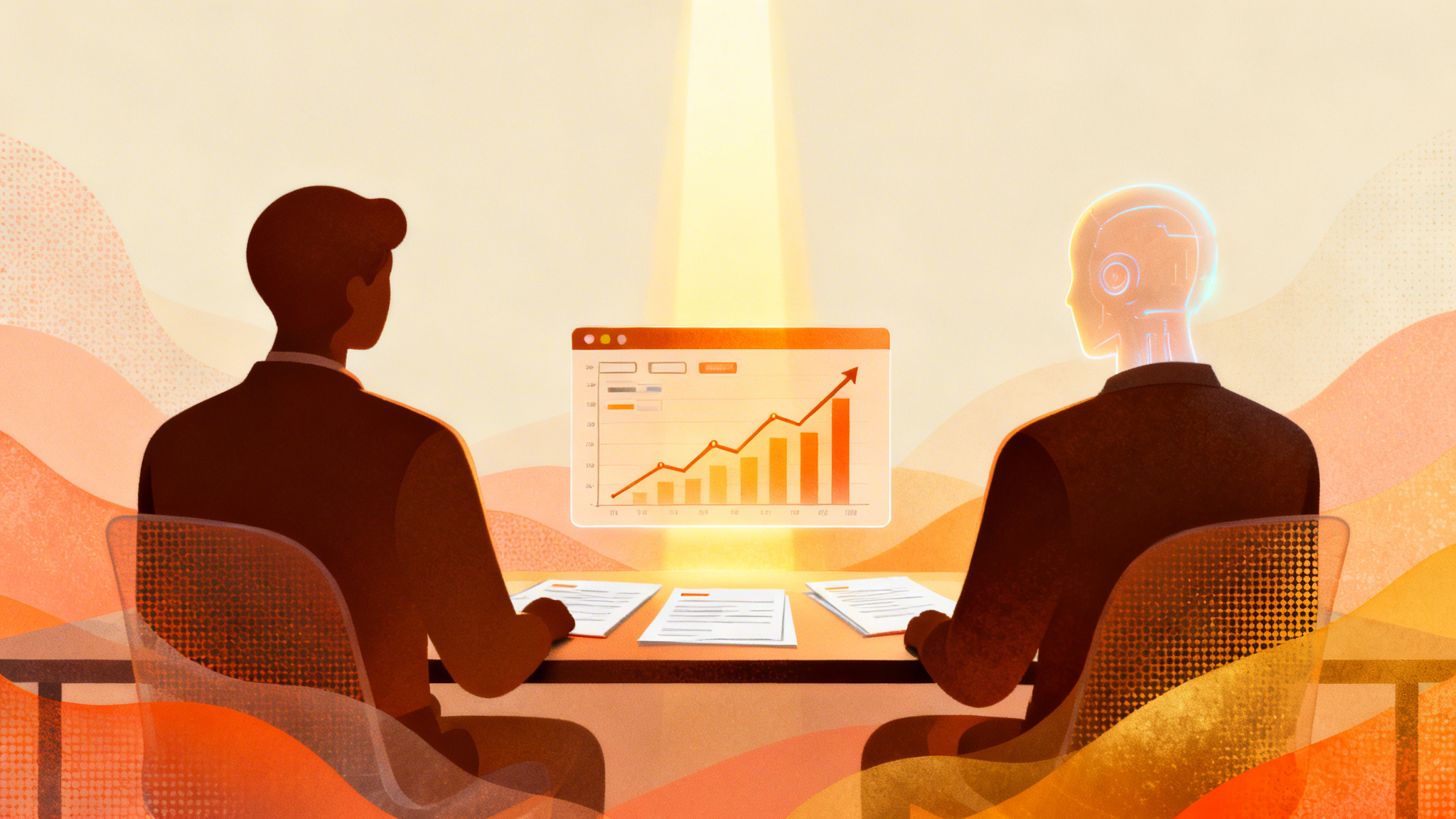
Your AI doesn't work for you. It works with you. The business can't imagine operating without it.
The Psychology
“Partnership. "I don't run AI. We run the business together."”
The Reality
The AI brain is a strategic business partner. It manages operations autonomously, identifies opportunities proactively, reports at board level, and continuously improves itself.
From the Trenches
Real words from real sessions
“We're going to be out of a job in about two years... Or we spend 25% of what we've made and we work in AI. Ross: 'All in.' Carrie: 'All in.' So that's what we did.”
“I was in Asda and I finished a task... I said well I've been building this... they were like f*** off.”
“We only started this in early September.”
What You'll Build
4 modules in this phase
Autonomous Operations Management
AI manages day-to-day operations with minimal oversight. Morning briefings, task assignment, progress tracking, client communication support — all running autonomously.
Deliverables
- Fully automated daily operations workflow
- Autonomous task management
- Self-monitoring and self-correcting systems
- Exception-only human intervention
Frequently Asked Questions
What does 'autonomous operations management' look like day to day?
Each morning, Claude Code runs a scheduled session that reviews all active projects, checks overnight metrics, processes any incoming requests, and produces a prioritised briefing for the team. It assigns tasks based on team capacity and project priorities, flags anything that needs human attention, and handles routine operational decisions (like rescheduling a delayed deliverable) without intervention. You start each day with a clear picture and action list.
How much should I actually let it manage autonomously?
Start with low-stakes operational tasks — status updates, meeting preparation, routine report generation, task assignment based on predefined rules. As you build confidence in the system's judgment, gradually extend to decisions with higher impact. Always maintain human approval gates for anything involving client communication, financial commitments, or strategic direction changes. The goal is removing busywork, not removing human judgment.
What if the autonomous system makes a mistake?
Every autonomous action should be logged with its reasoning, so mistakes are traceable and correctable. Build rollback capability into any automated process — if a task was incorrectly assigned or a report contained an error, you can reverse it quickly. The logging also lets you identify the root cause and adjust the rules to prevent recurrence. Mistakes will happen; the system's value comes from catching them being far less frequent than human operational errors.
How do morning briefings work technically?
A scheduled task triggers Claude Code before your workday starts. It reads from all your data sources — project status files, calendar, email summaries, metrics dashboards — and produces a structured briefing document covering: what happened overnight, what is due today, what is at risk, and recommended priorities. The briefing is saved as a file you review when you arrive, or it can be sent via email.
Board-Level Reporting
Executive reports generated automatically — performance summaries, strategic recommendations, risk assessments, and growth opportunities presented at leadership level.
Deliverables
- Executive reporting framework
- Automated monthly/quarterly reports
- Strategic insight summaries
- Data-driven recommendation system
Frequently Asked Questions
Can Claude Code produce reports that are genuinely board-ready?
Yes, with the right templates and data pipelines in place. You define the report structure, visual standards, and narrative tone that your board expects. Claude Code populates the framework with current data, generates charts, writes executive commentary, and formats the output to your specifications. The first few reports will need heavy editing; after refining the templates based on feedback, the output quality becomes consistently professional.
How does it generate strategic recommendations rather than just summarising data?
You configure the reporting agent with your strategic context — business goals, market position, competitive landscape, risk appetite. When it analyses performance data, it evaluates results against these strategic objectives and identifies gaps, opportunities, and threats. The recommendations follow a structured framework: what the data shows, what it means for the strategy, and what actions are suggested. Your role shifts from writing recommendations to reviewing and refining them.
Can it adapt the reporting style for different audiences?
Absolutely. You create audience profiles — the board wants high-level strategic summaries with financial impact, the operations team wants detailed metrics and action items, clients want clear performance narratives with next steps. The same underlying data produces different reports by applying different templates and narrative frameworks. Claude Code selects the appropriate profile based on the report type.
How do I ensure the data in board reports is accurate?
Build a verification pipeline into the report generation process. Every data point traces back to its source query, every calculation is logged, and automated cross-checks compare totals against known control figures. The report template includes a data quality section noting the freshness of each data source and flagging any gaps. Never present unverified figures — if a data source was unavailable, the report should say so explicitly.
Continuous Self-Improvement
The AI brain doesn't just operate — it gets better. Learning from every interaction, refining its own processes, identifying inefficiencies, and proposing improvements.
Deliverables
- Self-improvement pipeline
- Skill evolution system
- Performance self-assessment
- Improvement proposal automation
Frequently Asked Questions
What does it mean for the AI 'brain' to improve itself?
Every interaction generates learning — which approaches worked, which failed, what the user corrected, what patterns recur. Claude Code captures these lessons in its CLAUDE.md files and memory system, so future sessions benefit from past experience. Over time, the instructions become more precise, the edge cases are documented, and the system handles increasingly complex tasks without guidance. The improvement is in the configuration, not in the model itself.
How do I formalise the learning process rather than hoping it happens?
Create a structured feedback loop: after each significant task, document what went well and what needed correction in a lessons-learned file. Periodically review these lessons and update CLAUDE.md rules, skill definitions, and workflow templates accordingly. Schedule a monthly 'brain review' session where you audit the accumulated knowledge, remove outdated instructions, and consolidate patterns into clearer rules.
Can the system identify its own weaknesses?
You can configure it to track error rates, correction frequency, and areas where it consistently asks for clarification. A scheduled analysis of these metrics highlights where the system underperforms — perhaps it struggles with a particular report format or frequently misinterprets a specific type of request. This data guides your improvement efforts so you focus on the highest-impact areas.
Is there a risk of the system 'learning' bad habits?
Yes, if corrections are inconsistent or if outdated rules are not removed. The mitigation is regular audits of your CLAUDE.md files and memory entries. Look for contradictory instructions, rules that were added reactively but no longer apply, and accumulated complexity that could be simplified. Treat your AI configuration like code — it needs refactoring and maintenance, not just accumulation.
Governance & Ethics Framework
At COO level, governance is critical. Data protection, ethical AI use, transparency protocols, and the frameworks that keep autonomous AI accountable.
Deliverables
- AI governance policy
- Ethics framework document
- Transparency and audit protocols
- Data protection compliance system
Frequently Asked Questions
What governance framework should I put around our Claude Code usage?
At minimum, you need: a data classification policy (what data Claude Code can and cannot access), an audit trail (logging all significant actions and decisions), role-based access controls (who can configure what), a review cadence (regular checks that the system operates within bounds), and an escalation policy (clear criteria for when human approval is required). Document these in your CLAUDE.md as enforceable rules, not just guidelines.
How do I handle data protection when Claude Code processes personal data?
Claude Code processes data locally on your machine, which simplifies the data protection picture considerably. Ensure personal data is stored in clearly marked, access-controlled directories. Configure your CLAUDE.md to prohibit copying personal data into logs, outputs, or shared files. Maintain your Record of Processing Activities covering AI-assisted processing, and include Claude Code usage in your privacy impact assessments where relevant.
Should I tell clients we use AI in our work?
Yes. Transparency builds trust and is increasingly expected by clients and regulators. You do not need to detail every technical aspect — a clear statement that you use AI tools to enhance analysis, reporting, and operational efficiency is sufficient. Emphasise the human oversight and quality controls in place. Many clients will see it as a positive differentiator rather than a concern, provided you can demonstrate responsible usage.
What ethical boundaries should I set for AI decision-making?
Define clear categories: decisions the AI can make autonomously (operational scheduling, data formatting, routine calculations), decisions it can recommend but a human must approve (client communications, financial commitments, strategic changes), and decisions it must never make (hiring/firing, legal judgments, anything affecting individuals' rights). Encode these boundaries in your CLAUDE.md and review them quarterly as your comfort level and the system's capabilities evolve.
How do I ensure accountability when AI is involved in decisions?
Maintain a clear audit trail: every AI-assisted decision should log what data was considered, what analysis was performed, what recommendation was made, and who approved the final action. The human who approves an AI recommendation owns the outcome — AI is a tool, not a decision-maker. This principle should be explicit in your governance documentation and understood by everyone on the team.
War Stories
Real examples from CoffeeBrain
These aren't hypothetical scenarios. Every story happened. Every lesson was learned the hard way.
The Self-Improving Brain
CoffeeBrain has an /improve skill that processes session learnings, updates its own memory, evolves skill configurations, and proposes architectural changes. It literally gets better every day without being asked.
Lesson learned:
The end state isn't a tool you use well. It's a partner that makes itself — and you — better.
Included Skills
Downloadable Claude Code skills
Pre-built, production-tested skills you can install directly into your Claude Code environment.
- Auto-improvement pipeline
- Executive reporting framework
- Governance policy templates
- Self-assessment automation
- Board-level insight generator
Outcomes
By the end of this phase
Clear, measurable outcomes that prove you've completed this phase and are ready for the next.
- Fully autonomous daily operations
- Board-level reporting automated
- Continuous self-improvement running
- Governance and ethics framework in place
- AI is a strategic business partner
- The business cannot imagine operating without it
Knowledge Check
Phase 7 Test
20 questions to verify your understanding of Full Partnership.
What does 'exception-only human intervention' mean in the context of autonomous operations management?
An autonomous morning briefing system assigns tasks to team members. What information should each task assignment include to minimise back-and-forth?
Self-monitoring and self-correcting systems are a hallmark of Phase 7. What is the critical difference between self-monitoring and self-correcting?
A business operating at Phase 7 finds that their AI manages daily operations while the owner focuses on strategy. What risk does this create if not properly managed?
An autonomous task management system tracks 15 client accounts simultaneously. What mechanism prevents a low-priority client from being systematically neglected?
What distinguishes board-level reporting from standard operational reporting?
When generating executive summaries automatically, what is the biggest risk the AI must guard against?
A data-driven recommendation system suggests the business should exit a specific market vertical. What validation should occur before this recommendation reaches a board report?
Quarterly strategic reports generated by Claude Code should include which forward-looking element?
An automated board report system produces a document that shows all KPIs improving. The business owner knows intuitively that something feels wrong. What should happen next?
A continuous self-improvement pipeline in Claude Code (e.g. an /improve skill) should operate on which cycle?
What is the most important safeguard for a self-improving AI system?
Performance self-assessment in Claude Code means the AI evaluates its own output quality. Why is external validation still necessary?
An improvement proposal automation system suggests restructuring the entire skill library. How should this proposal be handled?
A business went from zero to 87 skills in 6 months. What does the continuous self-improvement mindset suggest about the pace of skill creation going forward?
At COO level, an AI governance policy must address which fundamental question?
Transparency protocols for AI-assisted business operations should include which practice?
An audit system for autonomous AI operations should log which of the following?
Under UK GDPR, what specific obligation does a business have when using AI to process client customer data stored in systems like BigQuery?
A Phase 7 business uses AI as a strategic partner that self-improves and operates autonomously. What ethical principle should govern the boundary between AI autonomy and human accountability?
0/20 questions answered
Ready to start Phase 7?
Whether you're going self-service or want hands-on guidance, I'll help you get through Full Partnership with confidence.